
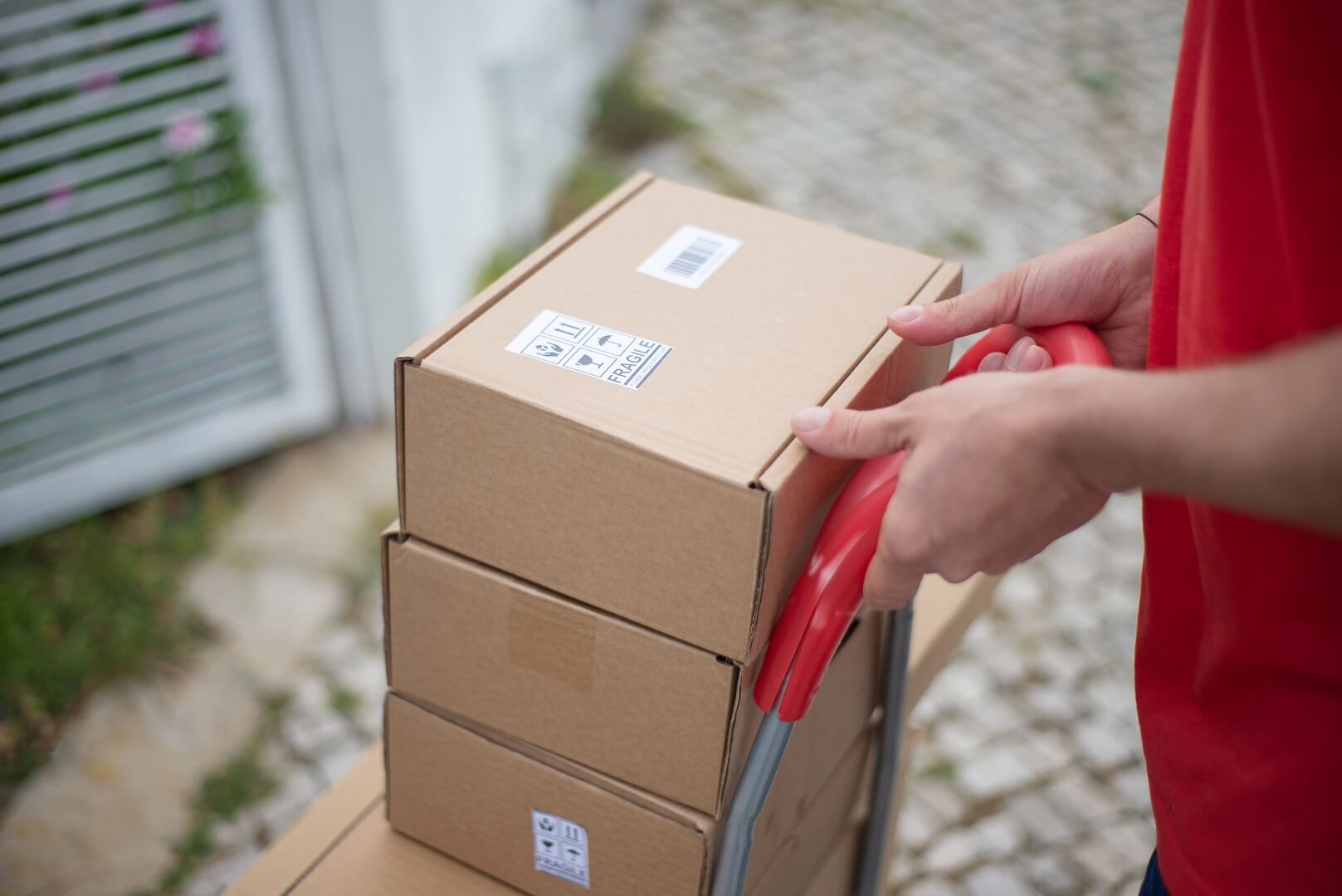
The best shipping partner for an Indian online store is not a single courier. It is the combination of carriers that delivers to your customers' pincodes at an acceptable cost, with a low rate of failed deliveries, predictable cash on delivery remittance, sensible handling of returns and support that answers when something goes wrong. Which courier wins differs by region, parcel weight, payment type and season, so the sound approach is to define your criteria, test two or three partners on real shipments, and keep measuring.
This guide is a selection framework rather than a ranking. It explains what a shipping partner actually does, the types of partner available, fourteen criteria that matter in India, how weight and volumetric weight decide your freight bill with worked examples, how cash on delivery remittance affects your cash flow, how failed deliveries and returns to origin erode profit, how to run a fair courier pilot and keep a monthly scorecard, and how a platform with courier integration fits in. Competitor facts come from the carriers' own pages and are dated, and we name no courier as best because no honest source can do that for your parcels.
Quick answer: Choose shipping partners on measurable criteria: pincode serviceability for the services you need (prepaid, cash on delivery and reverse pickup), delivery speed by zone, delivery success and return-to-origin rates, the full price structure including weight slabs and cash on delivery fees, remittance timing, failed-delivery handling and support. Use at least two partners, test them with the same parcels, and review a monthly scorecard.
What a shipping partner does for your store
A courier is more than a van. For every parcel it performs a chain of services, and each link can fail in a way that costs you money.
- Pickup. The courier collects the parcel from your location or hands the pickup to a local partner.
- Line haul. The parcel moves between hubs by road, rail or air.
- Last-mile delivery. A local agent attempts delivery at the customer's address.
- Cash collection. For cash on delivery orders, the agent collects the amount from the customer.
- Tracking and notifications. The courier updates status that your store and your customer see.
- Exception handling. If delivery fails, the courier reports a non-delivery and awaits instructions.
- Return to origin. After failed attempts, the parcel is sent back to you.
- Reverse pickup. For customer returns, the courier collects the item from the customer and brings it back.
- Remittance. Cash collected is paid to you after a settlement cycle.
When you compare partners, compare all nine, not only the price of step three.
Types of shipping partner
| Type | How it works | Strengths | Watch out for |
|---|---|---|---|
| Courier aggregator | One account gives you access to several courier companies, with rates and labels in one place | Rate comparison, one integration, a choice of couriers per order | Rates and rules depend on the aggregator's contracts; performance varies by courier |
| Direct national courier | You contract with one large carrier and ship directly | A direct relationship and negotiated rates at volume | One carrier's weak regions become your weak regions |
| Regional or local courier | A carrier strong in particular states or cities | Speed and cost within its home region | Limited reach outside it |
| Postal service | India Post and its parcel services | Reach into remote areas through the postal network | Speed and tracking differ from private couriers; check current service features |
| Same-day and hyperlocal | Short-distance delivery within a city | Speed for local orders | Higher cost per parcel and limited geography |
Most small and mid-sized stores begin with an aggregator or a platform that integrates one, because it gives access to several couriers without separate contracts, and add direct contracts only when volume justifies negotiating.
The 14 criteria that matter in India
1. Pincode serviceability, by service type
Indian addresses are served at the level of the PIN code, the six-digit code introduced by India Post in 1972. Its first digit identifies one of nine postal zones, the next two narrow it to a sorting district, and the last three identify the delivery office (Wikipedia, Postal Index Number). Couriers publish which pincodes they serve, and the answer can differ by service: a pincode may be served for prepaid delivery and not for cash on delivery, or for forward delivery and not for reverse pickup. Claims of "all India pincodes" need to be tested against your actual customers' pincodes and the services you need.
2. Delivery time by zone
Ask for typical delivery times between your pickup location and your main destinations, and compare them with what the customer sees at checkout. Speed matters most for categories where customers compare delivery promises, and less for planned purchases.
3. Delivery success and return-to-origin rates
The share of parcels delivered on the first attempt, the share delivered eventually and the share returned to origin are the most important performance numbers. A cheaper courier with a higher return rate can cost more overall.
4. Price structure
Freight is rarely one number. Ask about weight slabs, zone-based pricing, the cash on delivery fee, charges for returned parcels, reverse pickup charges, surcharges for remote or hard-to-reach areas, fuel or other adjustments, minimum charges and how GST on freight is shown. Our section on pricing below walks through a worked example.
5. Weight and volumetric weight rules
Couriers charge on the higher of the actual weight and the volumetric weight. The divisor used to calculate volumetric weight can differ between couriers, and so can the slab size. Check both, as the next section explains.
6. Cash on delivery remittance
The time between delivery and the money reaching your account is working capital you are lending to the logistics chain. Shiprocket's support documentation, for example, describes a standard remittance in which COD amounts are credited three times a week and processing takes 8 working days from delivery, with an optional early COD arrangement that can bring funds as soon as 2 days after delivery (Shiprocket, COD remittance, as read on 3 October 2026). Terms vary by provider and change, so ask each partner for the current schedule and any charge for faster payment.
7. Failed-delivery handling
Find out how many delivery attempts are made, how failed deliveries are reported and how you respond. Shiprocket's documentation defines a non-delivery report as a record of orders that could not be delivered with the reason, and states that a maximum of 3 attempts are made before the order is marked return to origin, with the seller able to ask for a reattempt or a return when responding (Shiprocket, What is NDR and RTO). It also notes that a merchant may incur additional shipping charges on orders processed for return to origin. Other couriers differ in detail, so ask each one.
8. Pickup reliability
A missed pickup delays every order behind it. Ask about pickup windows, cut-off times, what happens when a pickup is missed and how quickly you can reschedule.
9. Tracking and notifications
Accurate, timely tracking reduces the number of "where is my order" messages. Check how often status updates, whether customers receive notifications and whether tracking data flows into your store automatically.
10. Returns and reverse pickup
Customer returns are a normal part of online selling. Check whether reverse pickup is available at your customers' pincodes, how it is priced and how quickly returned goods reach you.
11. Damage, loss and claims
Ask what compensation applies to lost or damaged parcels, what proof is required, how long claims take and whether insurance is optional or built in. Photographs of packing and the parcel before dispatch make claims easier.
12. Support and escalation
You will need help on the day a pickup fails or a high-value parcel is stuck. Test support with a real query before committing, and find out who you escalate to.
13. Platform integration
A courier that connects to your store lets you create shipments, print labels, track parcels and handle returns without copying data. Check what is integrated: rates, serviceability, label creation, pickup requests, tracking, cancellations and return shipments.
14. Commercial terms
Look at the contract: minimum volumes, lock-in, rate review clauses, payment and billing cycles, and what happens if you want to leave.
Weight, volumetric weight and the box you choose
Many sellers are surprised by freight bills because they weigh the product but not the box. Shiprocket's help documentation defines the terms clearly: the entered weight is what the seller enters, the volumetric weight is calculated as length × breadth × height divided by 5000 (with dimensions in centimetres), the applied weight is the higher of the two, and the charged weight is the weight for which the courier actually bills. It also notes that the base factor for volumetric weight might vary for different courier partners (Shiprocket, weight terminology).
A worked example
The figures below are assumed. A parcel weighs 0.8 kg actual and the box measures 30 × 20 × 15 cm.
| Divisor | Volumetric weight | Applied weight (higher of 0.8 kg and volumetric) |
|---|---|---|
| 4,500 | 9,000 ÷ 4,500 = 2.0 kg | 2.0 kg |
| 5,000 | 9,000 ÷ 5,000 = 1.8 kg | 1.8 kg |
| 6,000 | 9,000 ÷ 6,000 = 1.5 kg | 1.5 kg |
The box volume is 30 × 20 × 15, which is 9,000 cubic centimetres. At the common divisor of 5,000, the volumetric weight is 1.8 kg, more than double the 0.8 kg of the product, so you are billed for 1.8 kg. Now suppose the same product fits a smaller box of 25 × 18 × 12 cm. The volume is 5,400, the volumetric weight at 5,000 is 1.08 kg, and the applied weight is 1.08 kg. If the courier bills in 500 gram slabs, 1.8 kg falls in the 2.0 kg slab and 1.08 kg falls in the 1.5 kg slab. With an assumed rate of ₹35 per slab:
| Box | Billed slab | Slabs | Illustrative weight charge |
|---|---|---|---|
| 30 × 20 × 15 cm | 2.0 kg | 4 | ₹140 |
| 25 × 18 × 12 cm | 1.5 kg | 3 | ₹105 |
| Saving per parcel | ₹35 |
At 500 parcels a month, that is ₹35 × 500, or ₹17,500 a month, from choosing a box that fits. The slab size, the rate and the divisor are assumptions here; check each courier's actual terms. The lesson is general: measure the packed box, not the product, enter accurate dimensions in your store, and standardise on a small set of box sizes.
The full price of a shipment
Treat the quoted rate as the start of the calculation. A complete cost sheet adds the extras that apply to the shipment type:
| Cost line | Applies to | Note |
|---|---|---|
| Base freight for the zone and applied weight | Every shipment | Compare at the same weight and zone |
| Cash on delivery fee | COD orders | May be a fixed amount, a percentage or the higher of the two |
| Surcharges | Remote areas, fuel adjustments, heavy parcels, special handling | Ask for the full list |
| Return to origin freight | Undelivered parcels | Often charged like a forward shipment |
| Reverse pickup freight | Customer returns | Price and availability differ from forward shipments |
| GST on freight | All shipments | Confirm with your accountant how it appears on the invoice and whether it is recoverable |
| Packaging | Every shipment | Your cost, not the courier's |
What a failed delivery really costs
The figures below are illustrative. A product sells for ₹1,000 and costs ₹500. Forward freight is ₹70, the cash on delivery fee is ₹30, return freight is ₹70 and packaging is ₹20.
| Outcome | Calculation | Result per order |
|---|---|---|
| Prepaid order delivered | ₹1,000 − ₹500 − ₹70 − ₹20 | ₹410 contribution |
| COD order delivered | ₹1,000 − ₹500 − ₹70 − ₹30 − ₹20 | ₹380 contribution |
| COD order refused and returned (stock restored) | −₹70 forward − ₹70 return − ₹20 packaging | −₹160 loss |
Now see what the return rate does across 100 cash on delivery orders:
| Return-to-origin rate | Delivered orders | Contribution from delivered | Loss on returned | Net |
|---|---|---|---|---|
| 20% | 80 | 80 × ₹380 = ₹30,400 | 20 × ₹160 = ₹3,200 | ₹27,200 |
| 10% | 90 | 90 × ₹380 = ₹34,200 | 10 × ₹160 = ₹1,600 | ₹32,600 |
Halving the return rate adds ₹5,400 of net contribution per 100 orders in this example (₹32,600 minus ₹27,200). That is why delivery success matters as much as freight price when you choose partners, and why our guide to reducing RTO in Indian ecommerce is worth reading alongside this one.
Cash on delivery and your cash flow
Cash on delivery is popular with first-time online buyers, and it ties up your money. Suppose you deliver ₹1,00,000 of COD orders in a week and the courier remits after about 10 working days, the figure Shiprocket's article gives for standard remittance, being 8 working days processing plus the credit schedule (read on 3 October 2026; confirm current terms). For that period, ₹1,00,000 of your sales has not reached your bank account, but you still have to pay suppliers, packaging, advertising and salaries. Faster remittance plans exist and usually carry a cost, so weigh that cost against the interest or opportunity cost of waiting.
Two practical points. First, reconcile each remittance statement against the orders delivered, because shortfalls from fees and returns are normal but should be explainable. Second, record the timing in your GST and accounting workflow; our guide to GST compliance for ecommerce sellers covers reconciliation. A common way to reduce the burden of cash on delivery is to offer a small discount for prepaid orders and to restrict COD for high-value orders or high-risk pincodes.
Returns to origin and non-delivery
A non-delivery report is the courier's way of telling you that a delivery failed. The reasons usually include an incorrect or incomplete address, the customer being unavailable, the customer refusing the parcel or an unserviceable location. The faster and more precisely you respond, the more parcels are delivered rather than returned.
- Respond the same day. A reattempt request within hours is worth more than one two days later.
- Call or message the customer. Many failed deliveries are solved by a short confirmation.
- Correct addresses promptly. Incomplete addresses are a leading cause of failure.
- Track reasons. If most failures are "customer unavailable" on cash on delivery orders, a pre-dispatch confirmation call will help.
- Use the courier's attempt rules. Know how many attempts are made before a parcel is returned.
Zones: why the same parcel costs different amounts
Couriers price freight by zone, which groups routes by distance and type. Names and definitions differ between carriers, but the pattern is similar: a local zone within a city, a regional zone within a state or neighbouring states, a metro-to-metro zone between major cities, a national zone for the rest of the country, and special zones for the north-east, hill states and islands. Remote locations may also attract surcharges. For you, the practical consequences are:
- Your pickup location decides which zone each customer falls in. A seller in Delhi and a seller in Chennai see different zone maps for the same customer.
- Your customer mix decides your average freight. A store whose customers are mostly in two metros pays less per parcel than one that ships nationwide.
- Free shipping thresholds should be set against your average freight, not a guess. If your average freight at national zone rates is ₹90, offering free shipping above ₹499 may give away most of the margin on a ₹500 order.
- If your volume is concentrated in particular regions, a partner who is strong there may beat a cheaper national average.
Ask each partner for its rate card by zone and weight slab, and the list of pincodes in each zone, so that you can calculate your own average using your own order history. An average based on your real customers is worth more than any brochure rate.
Setting the delivery promise at checkout
A delivery promise that the courier cannot keep creates support tickets, refunds and bad reviews. Build the promise from real data:
- Dispatch time. How long between order and handover to the courier, including packing and the pickup cut-off.
- Typical transit time by zone. Use your own history for each partner and zone, not the courier's best case.
- A buffer. Add time for the slowest ten per cent of parcels, and extra around festivals and sale periods when volumes rise.
With assumed numbers, if you dispatch within one day, the typical transit to a national-zone pincode is three days and you add one day of buffer, the promise should be five days, not three. Showing a pincode check on the product page, with an estimated delivery range for that pincode, sets expectations before payment. It is better to be quietly early than loudly late.
Peak seasons
Festival and sale periods raise parcel volumes across the industry, and delays are more likely. Plan for them by shipping earlier in the day, adding buffer to the promise, keeping a second partner ready, avoiding heavy promotions without checking dispatch capacity, and warning customers in advance. After the season, review each partner's scorecard for those weeks separately, because a courier that performs well in ordinary months can struggle at peak.
Negotiating with partners as you grow
Aggregator and platform rates are a good starting point. Once your volume is steady, you have leverage for better terms, but negotiate on facts:
- Bring data. Present your monthly volumes by zone, weight and payment type, plus your return-to-origin rate.
- Negotiate the whole price, including cash on delivery fees, return charges and surcharges, not just base freight.
- Ask for service commitments as well as price: pickup windows, remittance timing and escalation contacts.
- Avoid minimum-volume commitments you cannot meet in your slowest month.
- Keep alternatives. A second partner with live shipments is your strongest negotiating position.
- Get terms in writing, including the rate review clause and notice period.
A multi-courier strategy
Relying on one courier makes your delivery performance only as good as that courier's weakest region. A simple allocation plan uses two or three partners and assigns shipments by rule:
| Shipment type | Allocation rule (example) |
|---|---|
| Metro to metro, prepaid | The fastest partner with a good delivery record |
| Remote or tier 3 pincodes | The partner with proven reach and the best success rate there |
| Cash on delivery | The partner with the lowest return rate and the shortest remittance |
| Heavy or bulky parcels | The partner with the best weight slab pricing |
| Fallback | A second partner when the first has a pickup failure or a regional disruption |
Review the rules every month using your own data. An aggregator or a platform that shows rates and delivery estimates for each order makes this easier, because you can choose per shipment instead of locking in one carrier.
Run a fair courier pilot
- Choose two or three candidate partners that cover your main pincodes.
- Select a sample of at least 100 shipments per partner, spread across zones, weights and payment types.
- Use the same packaging and the same dispatch time for each partner.
- Record for every parcel: pickup time, delivery time, attempts, outcome, damage, cost and remittance date.
- Compare the results using the scorecard below, not the freight rate alone.
- Test support with a real query about a delayed parcel.
- Decide allocation rules and set a date to review them.
A monthly shipping scorecard
| Metric | How to calculate | Why it matters |
|---|---|---|
| Pickup on time | Pickups completed in the window ÷ pickups scheduled | Delayed pickups delay every order |
| Average delivery time | Total days from dispatch to delivery ÷ delivered parcels | Compare with the promise at checkout |
| First-attempt delivery rate | Delivered on first attempt ÷ shipped | Shows how well the courier handles addresses |
| Return-to-origin rate | Returned to origin ÷ shipped | Drives hidden cost |
| NDR resolution rate | Non-deliveries later delivered ÷ non-deliveries raised | Shows whether follow-up works |
| Damage and loss rate | Damaged or lost parcels ÷ shipped | Affects refunds and reviews |
| Cost per delivered order | Total shipping spend ÷ delivered orders | The true cost, including failures |
| Remittance timeliness | Remittances received by the promised date ÷ remittances due | Cash flow predictability |
| Support resolution time | Average time to resolve a ticket | Reliability when something goes wrong |
Note that cost per delivered order divides the whole spend, including returns, by the number of orders that were actually delivered. A courier with a lower per-parcel rate and a higher return rate can show a higher cost per delivered order.
Packaging and damage prevention
- Use a box or mailer that fits the product, so you pay for neither wasted space nor damage.
- Protect fragile items with cushioning, and seal every seam.
- Use tamper-evident tape on high-value orders.
- Put an invoice inside, and the label on the outside, facing up and flat.
- Photograph high-value parcels before dispatch for claims.
- Follow each courier's packaging guidelines, because non-compliance can void claims.
Returns, reverse pickup and your policy
Customers expect a clear returns process. Decide who pays for reverse pickup, the return window and how you check returned goods, then check which partners can collect from your customers' pincodes. Reverse pickup is not always available everywhere, so test it as well as forward delivery. Returned goods that arrive damaged or incomplete need photographs and a documented process, and refunds should follow your published policy. Our checklist for launching an online store lists the policy pages you need before you take your first order.
Compliance notes for shippers
- Invoices. Goods should travel with the right documents. See our guide to GST invoices for online stores for the invoice contents.
- E-way bills. Consignments above a value threshold generally need an e-way bill, which most single consumer orders are below; wholesale and stock transfers may not be. Check the e-way bill portal and your accountant.
- GST on freight. Courier invoices carry GST, so keep them for your records and ask your accountant how to treat them.
- Customer data. Addresses and phone numbers are personal data that you share with couriers; India's Digital Personal Data Protection Act, 2023 requires reasonable security safeguards (DPDP Act, 2023, MeitY).
How ShopMate handles shipping
ShopMate's site states that merchants are connected to 40+ shipping partners covering all India pincodes, with rate comparison, one-click label printing, shipment tracking, cash on delivery support, returns and reverse pickup, and a pincode serviceability check (ShopMate). Our team helps merchants onboard with the shipping partners, and settlements are managed through the merchant's own shipping account dashboard.
In the admin panel, the shipping integration works with two routes: Shiprocket, a multi-courier aggregator, and Delhivery, a national courier. For shipments created through Shiprocket, the admin sees a table of available couriers showing the freight charge, the estimated delivery days and a rating, and chooses a courier, after which the airway bill and pickup are generated. For shipments created through Delhivery, a single click confirms the shipment, and Delhivery assigns a courier automatically. The admin panel supports label download, tracking updates and return shipments for both routes, and shipment cancellation for Shiprocket shipments.
Be sure to ask the questions in this guide in your demo: which couriers are available to you, how coverage looks for your main pincodes by service type, what the cash on delivery remittance schedule is on your shipping account, and how returns to origin and reverse pickup are charged. If you need a courier that is not available through these routes, ask the team before you decide. Pricing is a flat 5% commission plus 18% GST on every order, with no setup fee and no yearly maintenance charge (ShopMate pricing); courier freight is charged by the shipping provider through your own account and is separate.
Frequently asked questions
Which is the best shipping partner for ecommerce in India?
There is no single best partner. Performance differs by region, weight, payment type and season. Compare partners on pincode serviceability, delivery time, delivery success and return rates, total cost per delivered order, cash on delivery remittance and support, using a pilot with your own parcels.
What is volumetric weight and how is it calculated?
Volumetric weight reflects the space a parcel occupies. A common formula is length × breadth × height in centimetres divided by 5,000, though the divisor can vary by courier. The courier charges on the higher of the actual and volumetric weights.
How long does cash on delivery remittance take?
It depends on the provider. Shiprocket's support documentation describes standard remittance as credits three times a week with processing of 8 working days from delivery, and an early option as soon as 2 days after delivery. Check the current terms with each provider.
What is an NDR and what is RTO?
A non-delivery report records an order that could not be delivered and why. Return to origin means the parcel is sent back to you after delivery attempts fail. Shiprocket's documentation says a maximum of 3 attempts are made before RTO, and that return shipments may incur additional charges.
Should I use one courier or several?
Several is safer. Using two or three partners lets you assign shipments by region and payment type, and gives you a fallback when one has a disruption. An aggregator or integrated platform makes this practical without separate contracts.
How can I reduce shipping costs?
Measure the packed box and use a size that fits, enter accurate dimensions, compare rates per order, reduce returns to origin through address checks and confirmation calls, and negotiate once your volume is steady. Compare cost per delivered order, not just freight.
Do I need an e-way bill for online orders?
E-way bills are generally required for consignments above a value threshold, commonly ₹50,000. Most single consumer orders are below that, but bulk and wholesale shipments may not be. Check the e-way bill portal and your accountant.
Which couriers does ShopMate work with?
ShopMate's shipping integration works through Shiprocket, which provides access to multiple couriers, and Delhivery, and its site states that merchants are connected to 40+ shipping partners covering all India pincodes. Ask the team for the couriers available to you and their coverage at your pincodes.
Sources and further reading
Shipping rates, rules and remittance terms change frequently. Carrier facts below were read on 3 October 2026 from the carriers' own pages and should be confirmed on the day you decide. Sources were last checked on 3 October 2026.
- Shiprocket, Weight terminology, COD remittance and What is NDR and RTO.
- Wikipedia, Postal Index Number, for the structure of PIN codes; India Post, official site; Delhivery, official site.
- E-way bill system, official portal.
- Ministry of Electronics and Information Technology, The Digital Personal Data Protection Act, 2023.
- ShopMate, home and pricing pages, for ShopMate shipping features and pricing.
Disclaimer: This article is for general information only and is not legal, tax or financial advice. ShopMate is the publisher of this guide and has a commercial interest in the platform it describes. Courier names are used only to describe facts published on their own pages; this guide is independent of them and does not rank them. All rupee figures in worked examples are assumed for illustration and do not represent any courier's rates. Rates, rules and remittance terms change, and your situation may differ. Consult a qualified chartered accountant or legal professional before making decisions.
Compare couriers on your own parcels
The fastest way to choose partners is to see real rates and delivery estimates for your own orders. ShopMate offers a 7-day free trial and a demo call, where you can walk through courier selection, label printing, tracking and returns, and ask about coverage at your pincodes. Book a free demo, review the pricing details, or read more about ShopMate.