
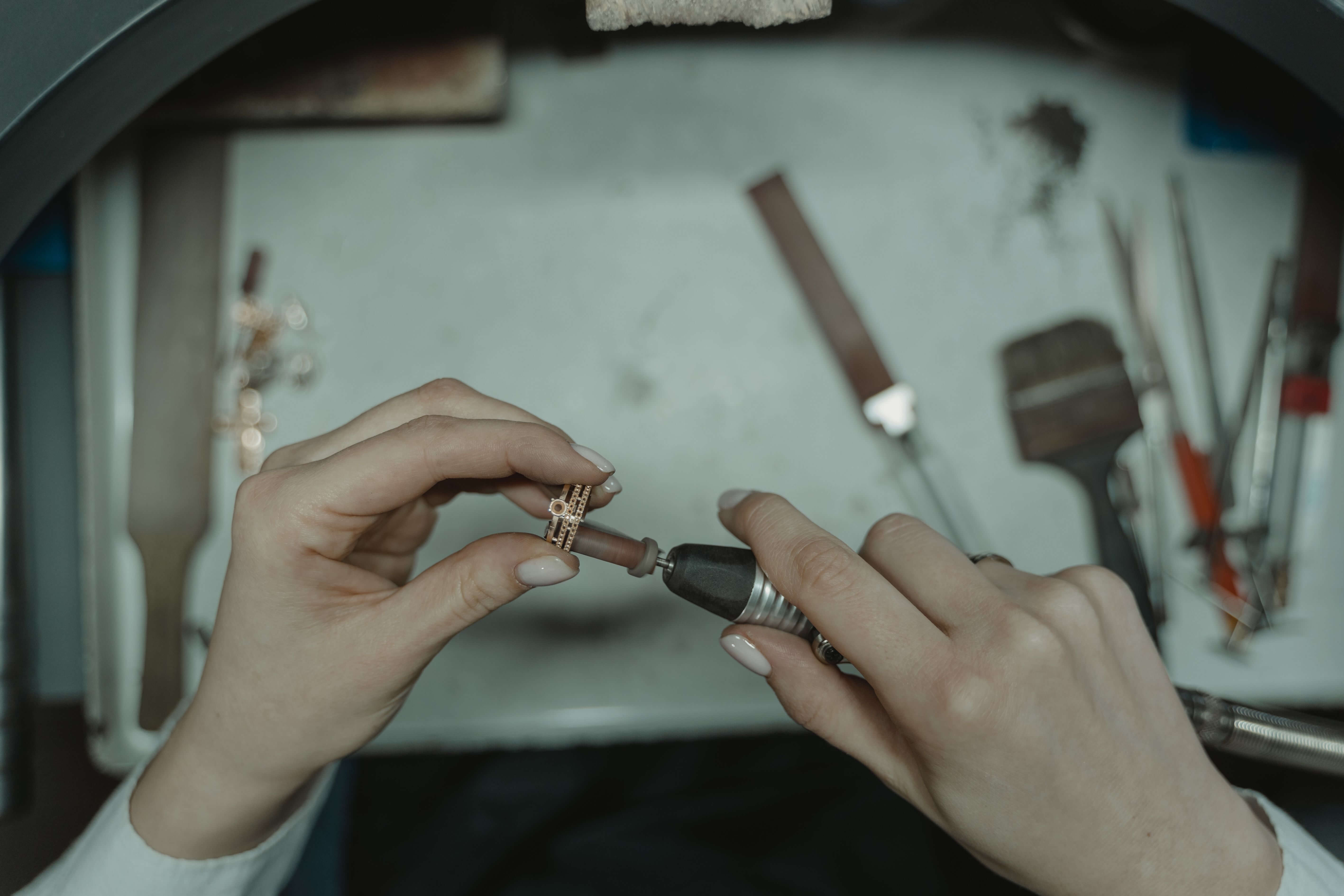
To place an order for custom-made jewellery through an online store, follow ten steps: choose a seller that offers custom work, prepare a clear design brief, request a written quote, review a design sketch or 3D render, confirm metal, stones and size, check hallmarking and certificates, pay an advance through a traceable method, approve progress photos, receive insured delivery and keep every document. Agree everything in writing, because custom pieces are usually not returnable.
This guide is for buyers who want a ring, pendant, chain or set designed for them, and for jewellers who want to run custom orders smoothly online. It explains what to ask, what a good quote looks like, how hallmarking and certificates fit in, how payments and timelines usually work, and which mistakes cause disputes. It names jewellery sites only as examples of how they describe themselves, without endorsing any of them.
Quick answer: Pick a jeweller with clear policies and a real address, send a detailed brief with reference images and your budget, get an itemised quote (metal, weight, stones, making charges, taxes), approve a design preview, confirm hallmarking and certificates in writing, pay a traceable advance, approve progress photos, and accept delivery only after checking the piece against the agreed specification.
What "custom-made" means
Custom jewellery is made or modified to your specification. Wikipedia's article on jewellery describes the materials and traditions involved. Online, custom orders fall into three levels:
| Level | What it means | Typical lead time |
|---|---|---|
| Customised from a catalogue | Pick a design and change size, metal or stone | Days to a few weeks |
| Co-designed | The jeweller adapts your reference images into a new design | Weeks |
| Fully bespoke | A new design from your brief, sketched, modelled and made | Several weeks |
Lead times are examples; always get the seller's own estimate in writing. Online jewellers describe their ranges on their own sites. For example, CaratLane, BlueStone and Melorra describe gold, diamond and gemstone jewellery. Whether a seller accepts custom designs, and how, is stated on its own pages, so check before you start.
Step 1: Choose a seller that does custom work
Look for a seller that clearly offers customisation and shows examples. Check:
- A physical address, phone number and a named contact person.
- A page that explains the custom order process and timelines.
- Photos of previous custom pieces, ideally with customer feedback.
- Clear policies on advances, returns, resizing and repairs.
- Whether they sell hallmarked jewellery and give certificates for stones.
The Bureau of Indian Standards publishes a list of licensed jewellers on its hallmarking pages. Use it to check a seller's status where relevant.
Step 2: Prepare your design brief
A good brief saves weeks. Include:
- Type of piece: ring, pendant, earrings, bracelet, chain or set.
- Metal: gold (and purity), silver, platinum, or another metal, and colour such as yellow, white or rose.
- Stones: diamonds, gemstones or none, with size, shape and quality preferences.
- Size: ring size, chain length, bangle size and weight preference.
- Style: three to five reference images and notes on what you like in each.
- Budget: a range, so the designer can choose suitable materials.
- Occasion and deadline: an engagement, a wedding, a gift, a festival.
- Special details: engraving, birthstones, family motifs.
Step 3: Learn the language: purity, weight and stones
A few terms will help you read a quote:
- Purity: the proportion of precious metal. Wikipedia explains this in its article on fineness. Higher purity metals are softer, so choose a purity that suits daily wear.
- Weight: usually in grams; the price depends heavily on it.
- Making charges: the cost of labour and design, shown as a percentage or a fixed amount.
- Hallmark: a mark that certifies purity. See Wikipedia's hallmark article. In India, hallmarking is run by BIS under published regulations; check the current rules on the BIS hallmarking page.
- Stone grading: for diamonds, the cut, colour, clarity and carat weight, usually stated on a grading certificate from a lab.
Step 4: Request an itemised written quote
A quote should break the price into parts so you can compare sellers. Ask for:
| Line | What to confirm |
|---|---|
| Metal | Type, purity, expected weight and the rate used |
| Stones | Type, size, count, quality and certificate |
| Making charges | Percentage or fixed amount, and what it covers |
| Design or CAD fee | Whether it is included or separate |
| Hallmarking and certification | Whether included, and which certificates you receive |
| GST | Rate and amount, shown on the invoice |
| Delivery and insurance | Cost and carrier |
| Timeline | Design approval date and delivery date |
Metal prices move, so ask how long the quote is valid, and whether the final weight can change the price after making. Ask whether a price lock is possible with a larger advance. GST applies to jewellery sales, and the rate and treatment of making charges can be technical, so check the GST portal or ask an accountant. See our guide to GST invoices for an online store for what a valid invoice shows.
A worked example with assumed figures
The numbers below are assumptions to illustrate how a quote can be read, not market prices.
| Line | Assumption | Amount (₹) |
|---|---|---|
| Metal | 5 g at an assumed ₹7,000 per gram | 35,000 |
| Stones | One stone, assumed price | 20,000 |
| Making charges | Assumed 12% of metal value | 4,200 |
| Subtotal | 59,200 | |
| GST | Assumed 3% on this subtotal for illustration | 1,776 |
| Total | 60,976 |
Real rates, GST treatment and making charges differ, and the metal rate changes daily. Use the example only to see why you need a line-by-line quote.
Step 5: Review the design before production
Ask for a design sketch or a 3D render. Check it carefully:
- Does the shape, stone placement and proportions match your brief?
- Is the size right? Ask for dimensions in millimetres and a life-size print.
- Are the prongs, settings and clasps secure and comfortable for daily wear?
- Are engravings spelt correctly?
Request changes now, since changes after casting are expensive or impossible. Ask how many revisions are included. Approve the final design in writing, by message or email, with the date.
Step 6: Confirm materials, certificates and hallmarking in writing
Write down what you agreed:
- Metal and purity, and the gram weight range.
- Stones, with grading certificates for diamonds and gemstones.
- Hallmarking: whether the finished piece will be hallmarked and where the hallmark appears.
- Ring size or length, with the tolerance for resizing.
The BIS site publishes the hallmarking regulation and a list of licensed jewellers; confirm current requirements there rather than relying on a seller's summary.
Step 7: Pay the advance safely
Custom jewellery usually needs an advance, because the jeweller buys metal and stones for you. Protect yourself:
- Pay only through traceable methods such as UPI, card or net banking on a secure checkout. UPI is run by NPCI; see Wikipedia.
- Avoid paying cash or into a personal account with no receipt.
- Get a written receipt that states the amount, the item and the balance due.
- Ask what the advance covers and whether it is refundable if you cancel before production.
- Pay the balance only after you have seen the finished piece or its photos and approved it.
Step 8: Track production and approve progress photos
A reliable jeweller will send updates: a casting photo, a stone-setting photo and the finished piece before shipping. Check each against the approved design. Ask for a close-up of the hallmark and the stone settings. If something is wrong, say so immediately and in writing, while rework is still possible.
Step 9: Delivery, insurance and unboxing
- Choose insured, tracked delivery with signature, and confirm who bears the risk in transit.
- Check the packaging for tampering on arrival, and film the unboxing.
- Verify the piece against the order: weight, size, stones, hallmark and engravings.
- Check the invoice and certificates match the item.
- Report any mismatch the same day, with photos.
Step 10: Keep your documents and plan aftercare
Store the invoice, stone certificates, the design approval, the hallmark details and the delivery receipt together. Ask about:
- Resizing and repair policy: free or paid, and for how long.
- Exchange or buyback terms, which differ widely between sellers.
- Cleaning and care instructions.
- Insurance for valuable pieces under your home or jewellery policy.
Custom jewellery order checklist
- The seller has a real address, clear policies and examples of custom work.
- My brief includes reference images, size, metal, stones and budget.
- I have an itemised written quote with a validity date.
- I approved a sketch or 3D render in writing.
- Hallmarking and certificates are confirmed in writing.
- I paid the advance through a traceable method and got a receipt.
- I received progress photos and approved them.
- Delivery is insured and tracked.
- I verified the piece on delivery and kept all documents.
Common mistakes with custom jewellery orders
- Vague briefs that lead to a design you did not want.
- Verbal agreements. Without writing, disputes are hard to settle.
- Ignoring making charges and focusing only on the metal rate.
- Skipping hallmark and certificate checks.
- Paying the full amount upfront to an unknown seller.
- Guessing ring size. Measure at the end of the day, when fingers are largest, or use a proper sizer.
- Forgetting the return policy. Custom items are often not returnable except for defects.
If you are a jeweller: how to run custom orders online
Custom orders can make an online jewellery business stand out, but they require trust and structure. A branded store helps:
- Offer a clear custom-order flow: a brief form, quote, design approval and advance payment.
- Itemise every quote and keep GST invoices accurate.
- Show hallmarking and certificates on product pages and invoices.
- Send progress photos and keep a record of approvals.
- Ship insured and tracked, with clear packaging and handover steps.
- Publish aftercare, resizing and return policies.
ShopMate offers a branded store with variants, GST invoices, Razorpay payments for UPI, cards, net banking, EMI and wallets, and courier shipping, at a flat 5% commission plus 18% GST per order with no setup fee (pricing). It does not advertise a dedicated custom-design or quote workflow, so you would run the brief and approval by chat or email and use the store for the order, payment, invoice and shipping. ShopMate publishes this guide and has a commercial interest. See our guides to GST compliance for ecommerce sellers and Razorpay setup.
Frequently asked questions
How do I order custom-made jewellery online?
Choose a seller that does custom work, send a detailed brief, get an itemised written quote, approve a design preview, confirm hallmarking and certificates, pay a traceable advance, approve progress photos and check the finished piece on delivery.
How long does custom jewellery take?
It depends on the design and the seller. Catalogue customisations can take days to weeks, while fully bespoke pieces usually take several weeks. Ask for a dated timeline in writing and for updates at each stage.
Can I return or cancel a custom jewellery order?
Often only before production starts, or for defects, because the piece is made for you. Read the policy before paying an advance, and ask what share of the advance is refundable at each stage.
What is hallmarking and does it apply to my order?
Hallmarking certifies metal purity. In India the Bureau of Indian Standards runs it under published regulations. Whether it applies to your piece depends on the metal and current rules, so ask the seller and check the BIS website.
How do I know the stones are genuine?
Ask for a grading certificate from a recognised laboratory for diamonds and valuable gemstones, and check that the certificate details match the stone. Buy from sellers who provide this and who have clear return and valuation policies.
How should I pay for a custom order?
Use traceable methods such as UPI, card or net banking on a secure checkout, and get a written receipt. Pay the balance only after you have seen and approved the finished piece.
Sources and further reading
Hallmarking rules, taxes, prices and seller policies change. Seller descriptions come from their own sites as read on 11 October 2026; this guide does not review or endorse any seller. Sources were last checked on 11 October 2026.
- Wikipedia, Jewellery, Fineness, Hallmark and Unified Payments Interface.
- Bureau of Indian Standards, Hallmarking.
- CaratLane, caratlane.com; BlueStone, bluestone.com; Melorra, melorra.com.
- Goods and Services Tax Network, GST portal.
- NPCI, npci.org.in; ShopMate, pricing.
Disclaimer: This article is for general information only and is not legal, tax or financial advice, and is not a review or endorsement of any seller. Figures in the worked example are assumptions, not market prices or tax advice. ShopMate is the publisher of this guide and has a commercial interest in the platform it describes. Hallmarking rules, GST treatment and prices change; consult a qualified chartered accountant or legal professional and check each seller's terms before you order.
Run custom jewellery orders on your own store
If you are a jeweller and want a branded store for orders, payments, invoices and shipping, ShopMate offers a 7-day free trial and a demo call. Book a free demo, review the pricing or read about ShopMate.